
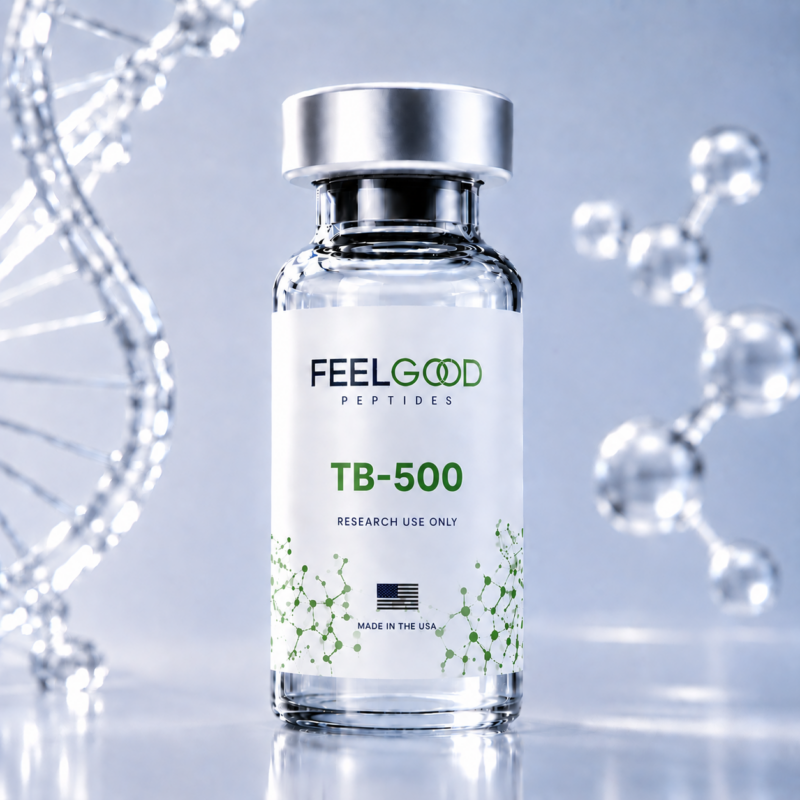
TB-500
TB-500
Muscle Growth & Recovery
TB-500 is studied to better understand cell migration, tissue repair signaling, and the vascular pathways involved in wound healing and regeneration.
- ✓ ≥99% purity
- ✓ Third-party COA
- ✓ US-synthesized
- ✓ Lyophilized powder

TB-500 is a synthetic version of thymosin beta-4, a peptide involved in cellular migration and repair. It is commonly studied for its potential to support healing, flexibility, and recovery.
TB-500 occupies a well-established position in preclinical regenerative biology research, with a mechanistic profile spanning actin dynamics, endothelial cell migration, angiogenesis, extracellular matrix remodeling, and inflammatory pathway modulation. What makes it particularly versatile as a tool compound is that these activities operate through at least two distinct molecular mechanisms — the intact peptide’s actin-binding and integrin αvβ3-mediated signaling activity, and the Ac-SDKP cleavage product’s NF-κB-dependent anti-inflammatory pathway engagement.
The intact TB-500 peptide drives VEGF-independent angiogenic signaling through integrin αvβ3 engagement and downstream Akt-eNOS pathway activation in endothelial preparations — a mechanism that remains active under VEGF-neutralized experimental conditions and is therefore pharmacologically separable from VEGF-dependent angiogenic tool compounds like BPC-157. This complementarity underlies the scientific rationale for studying TB-500 in multi-peptide combination research designs.
The Ac-SDKP tetrapeptide, released from the TB-500 N-terminus by renal meprin and prolyl oligopeptidase under physiological conditions, independently inhibits NF-κB-dependent pro-inflammatory gene expression in epithelial and renal cell preparations — establishing TB-500 as a dual-mechanism compound with both direct and cleavage-mediated bioactivity arms relevant to tissue remodeling and inflammatory pathway research.
- CAS Number: 77591-33-4
- Molecular Weight: ~4963 g/mol
- Purity: ≥99%
- Also Known As: Thymosin Beta-4, Tβ4, TB4, Ac-SDKP precursor peptide
- Chemical Formula: C₂₁₂H₃₅₀N₅₆O₇₈S
In cell-based and preclinical models, TB-500’s primary mechanism involves G-actin monomer sequestration through its LKKTETQ active domain. By binding free actin monomers, TB-500 regulates the ratio of monomeric to filamentous actin in cell preparations, facilitating cytoskeletal reorganization and directional cell migration in wound edge and scratch assay models. This actin-regulatory activity is central to TB-500’s role in cell motility research.
Angiogenic signaling operates through integrin αvβ3 receptor engagement and downstream Akt-eNOS pathway activation in endothelial cell preparations — a VEGF-independent route confirmed to remain functional under VEGF-blocking experimental conditions. This mechanistic independence from the VEGF axis distinguishes TB-500’s angiogenic activity from compounds like BPC-157 and makes it a complementary tool in dual-angiogenesis pathway research designs.
In cardiac tissue preparations, TB-500 exposure following ischemic injury models has been associated with enhanced angiogenesis, reduced fibrotic marker deposition in infarct border zone histology, and preserved ventricular function parameters — outcomes consistent with its combined actin-migration and endothelial signaling profile in tissue repair research models.
- Actin Dynamics and Cytoskeletal Reorganization Studies
- VEGF-Independent Angiogenesis and Integrin αvβ3 Signaling Research
- Cell Migration and Wound Edge Assay Models
- Ac-SDKP Cleavage and NF-κB Anti-Inflammatory Pathway Studies
- Cardiac and Tissue Repair Signaling Research
- Anti-Fibrotic Pathway and ECM Remodeling Models
- Multi-Peptide Combination and Angiogenic Pathway Complementarity Studies
Related Products
KLOW Blend (GHK-Cu + TB-500 + BPC-157 + KPV)
GLOW Blend (GHK-Cu + BPC-157 + TB-500)
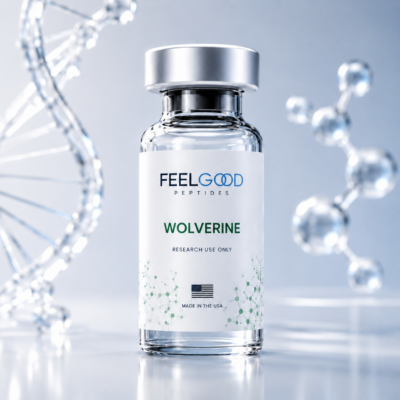
WOLVERINE Blend (BPC-157 + TB-500)
Feedback From the Research Community
Questions before ordering?
Our Commitment to Quality
At Feel Good Peptides, quality, consistency, and transparency are at the core of everything we do. We work with qualified manufacturing partners and established ingredient suppliers to ensure that every product meets strict quality standards before being made available to our customers. The manufacturing process outlined in the certificate includes raw material verification, controlled production procedures, lyophilization (freeze-drying), batch traceability, and analytical testing designed to support product integrity and consistency.
Raw Material Verification
Every batch begins with carefully sourced active ingredients obtained from qualified manufacturers operating under established quality systems. Incoming materials undergo verification procedures prior to being approved for production. This process helps ensure that only materials meeting predefined specifications move forward into manufacturing.
Controlled Manufacturing Standards
Products are produced using documented procedures designed to maintain consistency and quality throughout the manufacturing process. Production includes precision formulation, sterile handling practices, environmental controls, and lyophilization (freeze-drying) to support stability and long-term storage. Batch records are maintained throughout production to provide accountability and traceability.
Quality Control & Testing
Quality verification is a critical part of every production run. Depending on the product, testing may include:
* Purity Analysis (HPLC)
* Identity Confirmation (Mass Spectrometry)
* Concentration Verification
* Endotoxin Testing
No batch is released without documented quality review procedures. Certificates of Analysis (COAs) are maintained to support transparency and batch verification.
Batch Traceability
Each product batch is assigned a unique lot number, allowing traceability from raw material receipt through finished product distribution. This system helps ensure accountability throughout the manufacturing and quality control process.
Research Use Only
All products offered by Feel Good Peptides are designated Research Use Only (RUO) and are intended solely for laboratory and scientific research applications. These products are not approved for human consumption, medical use, diagnosis, treatment, or prevention of any disease. Feel Good Peptides makes no therapeutic or medical claims regarding any product offered on this website.
Transparency You Can Trust
We believe customers should have confidence in the products they purchase. Through documented manufacturing procedures, batch traceability, and quality verification processes, Feel Good Peptides is committed to maintaining high standards of quality, consistency, and transparency across our product catalog.
Draw & Dose Calculator
Use the calculator below to calculate accurate peptide dosages.
Dose of Peptide
Peptide Strength
Bacteriostatic Water
Need more information?
Our team is ready to answer your questions.
Contact UsFor Research Use Only. Not for Human Consumption. Not a drug, supplement, or food product. All products are designated Research Use Only (RUO). Purchasers assume responsibility for ensuring compliance with all applicable regulations.
Reviews
There are no reviews yet.